



Upright Metallurgical Microscope Manufacturers
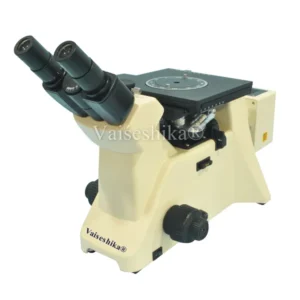
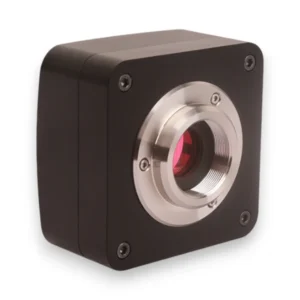
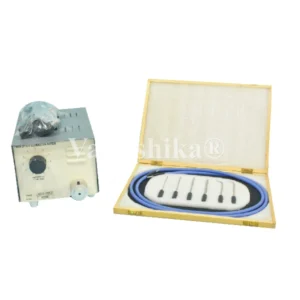
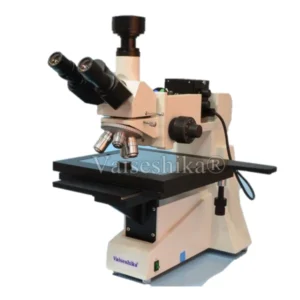
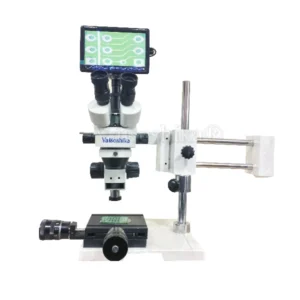
At Vaiseshika Electron Devices, we design and manufacture precision optical instruments that have served India’s metallurgy, materials science, defence, and industrial quality sectors since 1976. Our range of Upright Metallurgical Microscopes is built to the most exacting standards — delivering the image resolution, illumination consistency, and mechanical stability that demanding metallographic and microstructural examination requires.
Whether you are assessing grain structure in steel alloys, identifying surface inclusions in aerospace castings, studying phase distribution in ceramic composites, or conducting non-destructive quality evaluation of industrial components, a Vaiseshika Upright Metallurgical Microscope provides the precision optics and robust construction to make every observation reliable, repeatable, and fully documented.
What is an Upright Metallurgical Microscope?
An Upright Metallurgical Microscope is a specialised reflected-light microscope designed to examine the surface microstructure of opaque materials — metals, alloys, ceramics, polymers, coatings, and composites — that cannot be illuminated by transmitted light from below as in standard biological microscopy. The term “upright” refers to the configuration where the objective lenses point downward onto a specimen that rests flat on the stage, with light reflected back up through the objective to form the image.
This fundamental difference from a conventional compound microscope makes it the instrument of choice for all metallographic and materials examination tasks.
The key operating principle is epi-illumination (also called incident or reflected light illumination): light from a halogen or LED source is directed down through the objective lens via a beam splitter, strikes the polished specimen surface, and reflects back up through the same objective. This allows examination of solid, polished cross-sections — the standard metallographic specimen format — at magnifications ranging from 50× up to 1000× and beyond.
Three optical modes are commonly available on a well-specified upright metallurgical microscope:
Bright field illumination is the standard mode for most metallographic work. The polished surface reflects light uniformly; grain boundaries, phase regions, inclusions, and surface features appear as dark lines or contrast differences against the bright background.
Dark field illumination reverses contrast — flat, polished surfaces appear dark and only angled or rough features (grain boundaries, scratches, pores, precipitates) scatter light back into the objective to appear bright. This is particularly useful for revealing fine surface topography and very small inclusions invisible in the bright field.
Polarised light allows identification of anisotropic materials and phases — materials whose optical properties vary with crystal orientation. This is essential for studying certain alloys, minerals, ceramics, and composite microstructures where phase identification by colour rotation is needed.
Vaiseshika Upright Metallurgical Microscope Models
Vaiseshika offers three products in its Upright Metallurgical Microscope range, covering the spectrum from rigorous routine quality control to high-resolution research.
1. Upright Metallurgical Microscope — Type UMS 7001-A
The UMS 7001-A is Vaiseshika’s entry configuration for upright metallurgical microscopy, purpose-built for quality control laboratories, engineering colleges, polytechnics, and production-line inspection stations. It provides a reliable, stable optical platform for the most commonly performed metallographic tasks: grain size assessment, inclusion rating, coating thickness verification, surface defect identification, and heat treatment result evaluation.
The optical system uses fully achromatic objectives, providing colour-corrected images that faithfully represent the actual appearance of the specimen without the chromatic fringing that plagues lower-grade optics. A coarse and fine focus mechanism with rack-and-pinion drive gives smooth, controlled focusing, while the adjustable mechanical stage accepts standard 30 mm metallographic mounts with ease.
The built-in epi-illumination system uses a quartz halogen lamp source with adjustable intensity, delivering even, glare-free illumination across the field of view at all magnifications.
Typical magnification range: 50× to 500× (with standard objective set)
Typical applications: Production QC in steelworks and forging shops, incoming material inspection, academic metallography teaching, standard grain size rating per IS/ASTM standards, heat treatment verification.
2.. Upright Metallurgical Microscope — Type UMS 7001-D
The UMS 7001-D represents the advanced configuration in the Vaiseshika upright metallurgical microscope range. It has been specifically designed for comprehensive microstructure examination of metallographic specimens to the highest standards — making it the instrument of choice for research and development laboratories, government testing agencies, defence and aerospace quality assurance, and institutions performing failure analysis.
Its optical system is capable of revealing significant specimen details with outstanding contrast in both black-and-white monochrome and brilliant full colour — critical for phase identification in complex multi-phase alloys, composite materials, and coated surfaces. The metallurgical expert will find it a versatile tool not only for standard microstructure examination but also for optical detection of surface irregularities, inclusions, and subsurface faults in metals through non-destructive metallographic preparation and examination.
The UMS 7001-D accommodates a camera attachment for direct microphotography and video documentation, making it an excellent quality control and documentation platform for engineering industries, R&D establishments, and accredited testing laboratories.
Applications span ceramics, textiles, petrochemicals, avionics, defence, and research and development — reflecting the broad capability of its optical design and illumination system.
Typical magnification range: 50× to 1000× (with oil immersion objective)
Typical applications: Failure analysis and root cause investigation, aerospace and defence component inspection, ceramics and composite microstructure research, R&D in metallurgy and materials science, accredited third-party testing, government laboratory examination, NABL-compliant documentation workflows.
3. MET Image Capturing Device & Measurement Software — Type 7001-NS
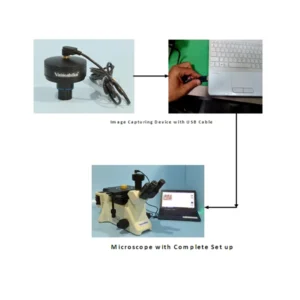
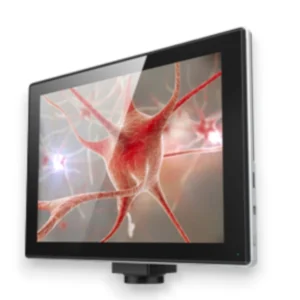
Complementing both microscope models, the 7001-NS is a complete digital imaging upgrade kit for any Vaiseshika upright metallurgical microscope equipped with a trinocular port. It includes a high-resolution digital camera, USB interface cable, and dedicated metallographic image measurement software, converting the optical instrument into a fully integrated digital metallographic analysis station.
The software provides on-screen linear measurement (grain size, coating thickness, inclusion length), area measurement, phase percentage estimation, angle measurement, image annotation, and structured report generation — all calibrated to the actual microscope magnification in use. Images and measurement data are exportable in standard formats for inclusion in quality reports, failure analysis documents, and research publications.
This makes the 7001-NS an essential addition for any laboratory requiring traceable, documented metallographic records — including NABL-accredited testing labs, IATF 16949-certified automotive quality departments, and academic research groups.
Typical applications: ASTM E112 grain size measurement, ASTM E45 inclusion rating, coating thickness documentation, phase fraction analysis, failure analysis reporting, research data collection, QC audit trails.
Key Technical Features of Vaiseshika Upright Metallurgical Microscopes
Epi-illumination system. Incident reflected light illumination via a beam splitter in the objective turret nosepiece, with adjustable halogen lamp intensity. Even, glare-free illumination at all magnifications is essential for consistent image contrast in metallographic work.
Objective lenses. Fully achromatic, anti-reflection coated plan objectives (on higher configurations) giving flat, colour-corrected fields across the full aperture. Standard objective sets cover 5×, 10×, 20×, 40×, and 100× (oil immersion), providing a total magnification range of 50× to 1000×.
Eyepieces. Wide-field 10× eyepieces (field of view 18 mm) as standard; 15× and 20× high-eyepoint variants available for spectacle wearers.
Focus mechanism. Coaxial coarse and fine focus with rack-and-pinion drive; fine focus graduation typically 2 µm per division for precise depth-of-field control on polished metallographic sections.
Mechanical stage. Graduated X-Y mechanical stage with vernier scales for specimen repositioning and feature location recording; accepts standard 30 mm and 40 mm metallographic mounts.
Trinocular head. A trinocular head with C-mount camera port is available for camera integration with the 7001-NS or third-party cameras.
Illumination options. Standard quartz halogen; LED illumination upgrade available for reduced heat, longer lamp life, and consistent colour temperature for photographic documentation.
Build quality. Heavy cast iron stand and stage for vibration immunity; essential in workshop-adjacent laboratory environments and on upper floors of multi-storey buildings.
ISO compliance. All instruments manufactured and tested under Vaiseshika’s ISO 9001 Quality Management System and dispatched with calibration records traceable to national standards from our ISO/IEC 17025:2017 accredited laboratory.
Maintainability commitment. Vaiseshika guarantees 10 to 15 years of spare parts availability and service support for all optical instruments — a unique assurance in the Indian market that protects your long-term investment.
Industries and Applications of Upright Metallurgical Microscopes
The upright metallurgical microscope is one of the most universally applied instruments in materials science and industrial quality assurance. Vaiseshika instruments serve customers across the following sectors:
Steel and metals industry. Grain size assessment per ASTM E112, inclusion rating per ASTM E45, weld HAZ examination, carburising and nitriding depth measurement, decarburisation depth checking — all standard tasks in steelworks, rolling mills, and forging shops. Every batch of structural steel, spring steel, bearing steel, and tool steel that must meet a microstructural specification requires a metallurgical microscope.
Automotive and engineering. IATF 16949 and PPAP requirements increasingly mandate microstructural documentation of critical components: gear tooth surfaces, camshaft lobes, crankshaft journals, bearing races, connecting rods. Upright metallurgical microscopes are indispensable on incoming inspection, in-process audit, and supplier qualification lines.
Aerospace and defence. Turbine blade alloy inspection, landing gear forging qualification, ammunition case material validation, armour steel grade verification. The UMS 7001-D’s combination of high magnification, dark field, and polarised light capability covers all these demanding applications.
Ceramics and advanced materials. Technical ceramics, carbide cutting tool inserts, ceramic composites, and refractory materials require microstructural examination to assess porosity, grain growth, phase distribution, and sintering quality. Polarised light mode is often essential for ceramic phase identification.
Petrochemical and power sector. Pipe weld quality, heat exchanger tube assessment, pressure vessel steel certification, and creep damage assessment in high-temperature alloy components all rely on metallographic examination.
Failure analysis and forensic engineering. When a component fails — whether a bridge fastener, a turbine disc, or an automotive crankshaft — metallographic examination of the fracture surface and adjacent microstructure is the primary investigative tool. The UMS 7001-D with the 7001-NS digital system provides the imaging and documentation capability required for court-admissible failure analysis reports.
Research and academia. IITs, NITs, CSIR laboratories, and university metallurgy and materials science departments require upright metallurgical microscopes as foundational research instruments. The wide magnification range, multiple imaging modes, and digital integration of Vaiseshika’s range make them suitable for both teaching and research applications.
Textile industry. Synthetic fibre cross-section examination, yarn quality assessment, and weave structure analysis are among the non-metal applications where upright reflected light microscopy is applied.
Upright vs. Inverted Metallurgical Microscope — Which Do You Need?
Both upright and inverted metallurgical microscopes use reflected epi-illumination and are designed for opaque specimen examination. The key difference is the orientation of the objective and stage:
In an upright configuration (UMS 7001-A and UMS 7001-D), the objective points downward onto the specimen surface. The specimen is placed polished-face-up on the stage. This is the traditional configuration, ideal for standard metallographic mounts (Bakelite or epoxy pucks), flat samples, and hardness test blocks. It is the more widely used configuration globally.
In an inverted configuration, the objective points upward and the specimen is placed polished-face-down on the stage. This is preferred when specimens are too large or irregularly shaped to be inverted onto a standard stage, when examining large flat samples without cutting and mounting, or when the specimen surface must remain undisturbed and face-down placement protects it.
For most standard metallographic laboratory work — where specimens are properly prepared, sectioned, mounted, ground, and polished — an upright metallurgical microscope is the appropriate and more economical choice. The inverted configuration is best reserved for large industrial samples or specialised research requiring access to uncut surfaces.
If you are unsure which configuration suits your application, contact our technical team for a no-obligation consultation.
Why Choose Vaiseshika for Your Upright Metallurgical Microscope?
50+ years of Indian manufacturing heritage. Vaiseshika Electron Devices was founded in 1976 in Ambala Cantt — India’s scientific instrument capital — with a mission to produce precision instruments of global quality in India. Our metallurgical microscope range has been developed and refined through decades of feedback from India’s most demanding users.
ISO/IEC 17025:2017 accredited calibration facility. Our in-house calibration laboratory is NABL accredited, ensuring that every instrument we dispatch carries traceable calibration records — a requirement for NABL-accredited testing labs and ISO 9001/IATF 16949 quality systems.
National awards for manufacturing excellence. The Government of India recognised Vaiseshika with the National Award for Quality Products (Vigyan Bhavan, New Delhi, 2004) and the National Award for Outstanding Entrepreneurship (2010) — among the most prestigious recognitions available to Indian manufacturers.
Prestigious clientele across sectors. ISRO, Maruti Suzuki, Bharat Petroleum, Reliance Industries, Siemens, NTPC, Bosch, Indian Oil, and Finolex are among the organisations that trust Vaiseshika instruments — a testament to their reliability in mission-critical applications.
GEM portal registered. Government departments, PSUs, and funded research institutions can procure Vaiseshika upright metallurgical microscopes directly through the Government e-Marketplace (GEM) portal, streamlining procurement procedures and ensuring GeM compliance.
10–15 years of maintainability guarantee. We commit to spare parts availability and after-sales service support for a decade or more after purchase — essential for laboratory instruments that must remain operational across long project timelines and institutional planning cycles.
Dedicated technical support. Our application and service team is available Monday to Saturday from our Ambala Cantt headquarters. On-site installation, operator training, annual preventive maintenance, and recalibration services are available across India.
Frequently Asked Questions — Upright Metallurgical Microscope
Q.1 What specimens can be examined with an upright metallurgical microscope?
Any opaque, polished surface — metals, alloys, ceramics, polymers, composites, coatings, and semiconductors. Specimens are typically prepared by sectioning, mounting in Bakelite or epoxy, and polishing to a mirror finish before etching with an appropriate reagent to reveal microstructural features.
Q.2 What magnifications are available?
The standard objective set covers 5×, 10×, 20×, 40×, and 100× (oil immersion). With 10× widefield eyepieces, total magnifications range from 50× to 1000×. For most steel microstructure grading and inclusion rating work, 100× to 500× is the working range.
Q.3 Can I perform ASTM grain size measurements with these microscopes?
Yes. The UMS 7001-D with the 7001-NS Image Capturing Device and Measurement Software is fully capable of ASTM E112 grain size measurement by the comparison, intercept, and planimetric methods. The software’s calibrated area and linear measurement tools support this directly.
Q.4 What is the difference between bright field and dark field illumination?
Bright field is standard for most work — polished surfaces appear bright and features appear as contrast differences. Dark field reverses this, making only angled or rough surface features appear bright. Dark field is particularly useful for revealing very fine features and inclusions not visible in bright field.
Q.5 Do I need an inverted or upright metallurgical microscope?
For standard metallographic specimens (mounted, polished pucks up to 50 mm diameter), an upright microscope is ideal and more widely used. An inverted configuration is better for large, unmounted, or irregularly shaped samples. Contact us to discuss your specific application.
Q.6 Is the microscope suitable for ceramics and non-metal materials?
Yes. The UMS 7001-D’s polarised light capability is particularly valuable for ceramic phase identification and anisotropy studies. Reflected bright field and dark field modes also apply to ceramic, polymer, and composite specimens.
Q.7 Can I add digital imaging and measurement capability later?
Yes. The 7001-NS MET Image Capturing Device is a retrofit kit compatible with any Vaiseshika upright metallurgical microscope that has a trinocular head. Specify a trinocular head at the time of purchase to ensure future compatibility.
Q.8 Are Vaiseshika microscopes available on the GEM portal?
Yes. Vaiseshika is a registered GEM seller. Government institutions, PSUs, and centrally funded universities can raise purchase orders directly through the GeM portal.
Most Searched Keywords
- Upright Metallurgical Microscope Manufacturers
- Top Upright Metallurgical Microscope Manufacturers
- Best Upright Metallurgical Microscope Manufacturers
- Upright Metallurgical Microscope Manufacturers in India