



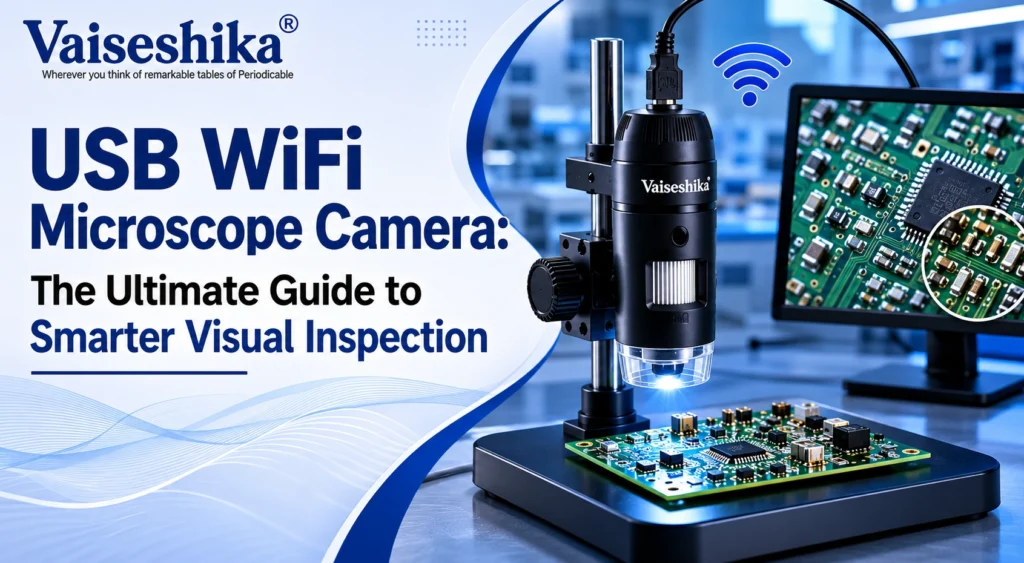
In the world of precision inspection and scientific imaging, the USB WiFi Microscope Camera has emerged as one of the most transformative tools available to researchers, engineers, educators, and quality control professionals. Combining the magnification power of a traditional microscope with modern digital connectivity, these compact yet powerful devices are redefining how we capture, share, and analyze microscopic images.
Whether you are inspecting circuit boards in an electronics lab, examining plant tissue in an agricultural research center, or teaching biology in a classroom, a USB WiFi Microscope Camera delivers remarkable flexibility, clarity, and real-time connectivity that conventional optical microscopes simply cannot match.
What Is a USB WiFi Microscope Camera?
A USB WiFi Microscope Camera is a digital imaging device that integrates a high-resolution camera sensor with a microscope optical system and offers dual connectivity — via a standard USB port and through a wireless WiFi network. This dual-interface design allows users to connect the device directly to a computer via USB for stable, wired transmission, or stream live images wirelessly to a smartphone, tablet, or laptop without the constraints of a physical cable.
The device typically features built-in LED illumination, adjustable magnification (ranging from 10x to 1000x or more depending on the model), and a CMOS or CCD sensor capable of capturing high-definition still images and video. The compact, handheld form factor makes it ideal for both bench-top laboratory use and portable fieldwork.
Key Features to Look For in a USB WiFi Microscope Camera
Choosing the right USB WiFi Microscope Camera depends on your specific application. Here are the most important specifications to evaluate:
- Resolution and Image Sensor Quality
The image sensor determines the sharpness and clarity of your microscopic images. Look for cameras offering at least 2MP resolution, with premium models delivering 5MP, 8MP, or even 12MP for detailed scientific imaging. Higher resolution is especially critical in metallurgical analysis, medical diagnostics, and semiconductor inspection. - Magnification Range
Different applications require different levels of magnification. A USB WiFi Microscope Camera used for PCB inspection may need 50x–500x magnification, while biological research may demand up to 1000x. Ensure the device offers a smooth, adjustable zoom so you can transition between magnification levels without losing focus. - WiFi Connectivity and App Compatibility
A key differentiator in modern microscope cameras is seamless wireless connectivity. Look for devices that support 2.4GHz or 5GHz WiFi bands and are compatible with dedicated mobile apps for iOS and Android. Good software allows you to capture images, record video, adjust brightness, and even take measurements directly on your device screen. - Built-In LED Illumination
Adequate lighting is fundamental to microscopy. Most USB WiFi Microscope Cameras come with adjustable LED ring lights that illuminate the specimen evenly and reduce glare. Some models feature polarized lighting, which is invaluable when examining reflective surfaces such as metal samples or gemstones. - Build Quality and Portability
Field researchers and quality inspectors on the move need a rugged, portable device. Look for aluminum-body construction, ergonomic grip design, and dust-resistant components. The lightweight design of a handheld USB WiFi Microscope Camera makes it far more versatile than a traditional benchtop instrument. - Frame Rate for Video Capture
For dynamic specimens or live process monitoring, a higher frame rate (30fps or above) ensures smooth, flicker-free video streaming and recording. This is particularly important in industrial quality control environments where moving parts or flowing samples need to be observed in real time.
Industry Applications of USB WiFi Microscope Cameras
The versatility of the USB WiFi Microscope Camera has made it indispensable across a wide range of industries:
Electronics and PCB Inspection: Quality control teams use these cameras to detect solder joint defects, trace micro-cracks, and verify component placement on circuit boards without removing the board from the production line.
Medical and Biological Research: Laboratories use WiFi-enabled microscope cameras to examine cell cultures, tissue samples, and microorganisms, sharing live feeds with remote colleagues or recording sessions for later analysis.
Agriculture and Food Safety: Agronomists and food scientists rely on USB WiFi Microscope Cameras to inspect grain quality, identify pest damage, detect fungal infections in crops, and analyze soil particle structures — often in the field rather than in a lab.
Jewelry and Gemology: Jewelers and gemologists use high-magnification WiFi microscope cameras to examine stone inclusions, surface finishes, and hallmark engravings with extreme precision.
Education: From school science labs to university research departments, these cameras make microscopy accessible and interactive. Students can view real-time magnified images on shared screens, making learning more engaging and collaborative.
Metallurgy and Material Science: Engineers in metal testing facilities use USB WiFi Microscope Cameras alongside hardness testers and metallurgical microscopes to study grain structure, surface corrosion, and weld quality.
USB vs. WiFi Mode — When to Use Each
Understanding when to use the USB connection versus the WiFi mode can significantly improve your workflow:
- USB Mode is ideal when you need maximum image stability, zero latency, and the highest data transfer rate. It’s the preferred choice during detailed measurement tasks, high-resolution image capture, and when working at a fixed workstation.
- WiFi Mode shines when you need mobility, remote viewing, or collaborative observation. Multiple users can simultaneously view the live feed on their own devices, making it perfect for group demonstrations, remote inspections, and fieldwork where running a USB cable isn’t practical.
How to Get the Best Results from Your USB WiFi Microscope Camera
To maximize performance from your USB WiFi Microscope Camera, follow these practical tips:
- Clean the lens regularly with an optical lens cloth to prevent dust or fingerprints from degrading image quality.
- Calibrate the focus before starting every session, especially when switching between magnification levels.
- Use a stable mounting stand to eliminate vibration, which can blur high-magnification images.
- Optimize lighting conditions by adjusting the LED intensity to suit the surface texture and material being examined.
- Update firmware and software periodically to take advantage of new features and performance improvements offered by the manufacturer.
Why the USB WiFi Microscope Camera Is the Future of Portable Imaging
The global shift toward digitization and remote work has accelerated demand for smart, connected inspection tools. The USB WiFi Microscope Camera perfectly addresses this demand — offering laboratory-grade imaging in a format that works anywhere, connects to anything, and empowers professionals to make faster, more informed decisions.
As industries increasingly rely on real-time data and remote collaboration, the gap between traditional optical microscopes and modern digital microscope cameras will continue to widen. Investing in a USB WiFi Microscope Camera is not just a hardware upgrade — it is a step toward smarter, more connected scientific work.
Explore Precision Microscopy Solutions with Vaiseshika
When it comes to sourcing reliable, high-performance optical and scientific instruments in India, Vaiseshika stands as a name synonymous with trust, precision, and decades of engineering excellence. With over 50 years of experience manufacturing world-class microscopes, calibration instruments, and measurement tools, Vaiseshika offers a comprehensive range of image capturing devices and optical instruments — including advanced microscope camera solutions — engineered to meet the demands of research labs, industrial facilities, educational institutions, and quality control centers. Whether you are looking for a USB WiFi Microscope Camera or a full suite of precision optical instruments, Vaiseshika’s ISO 17025:2017 certified products and dedicated after-sales support make it the ideal partner for your scientific and industrial imaging needs. Visit www.vaiseshika.com to explore the complete product range and find the right microscopy solution for your application.